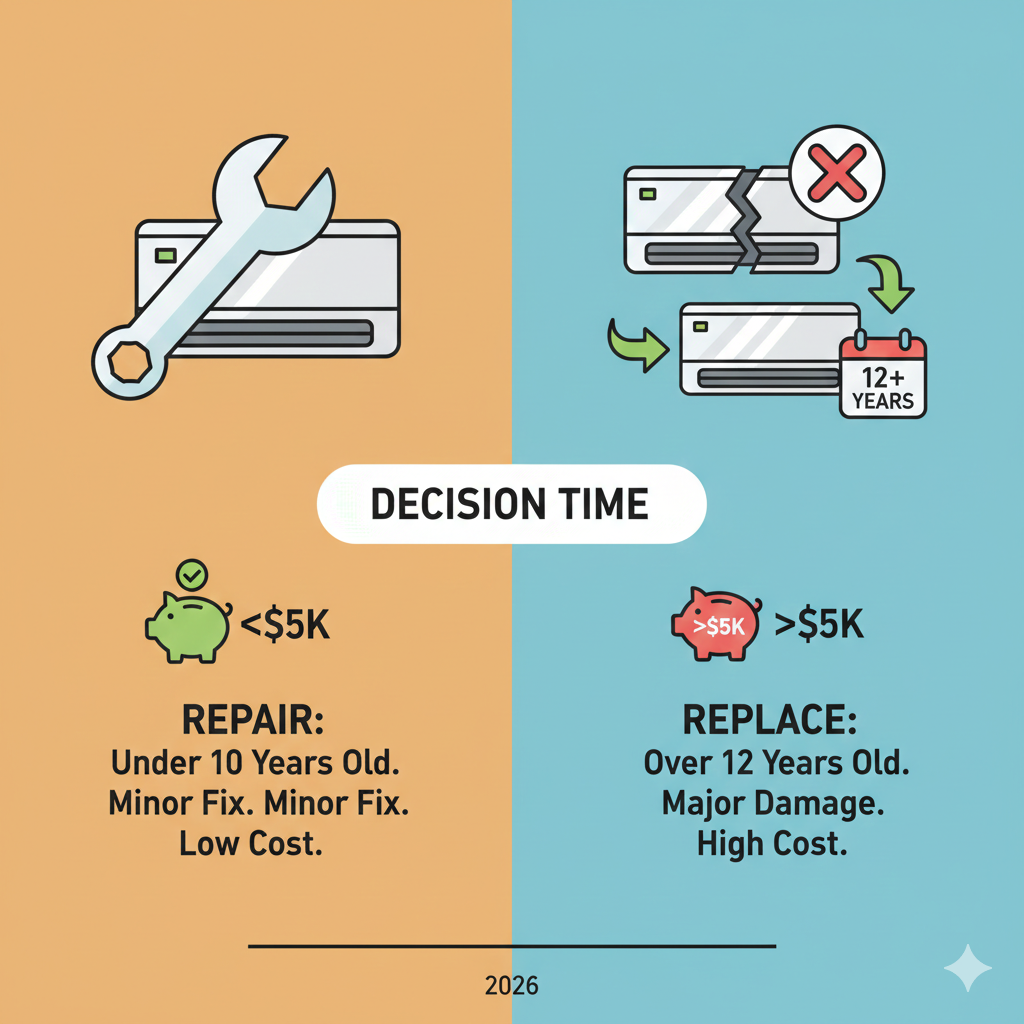
Should You Repair or Replace Your AC Unit?

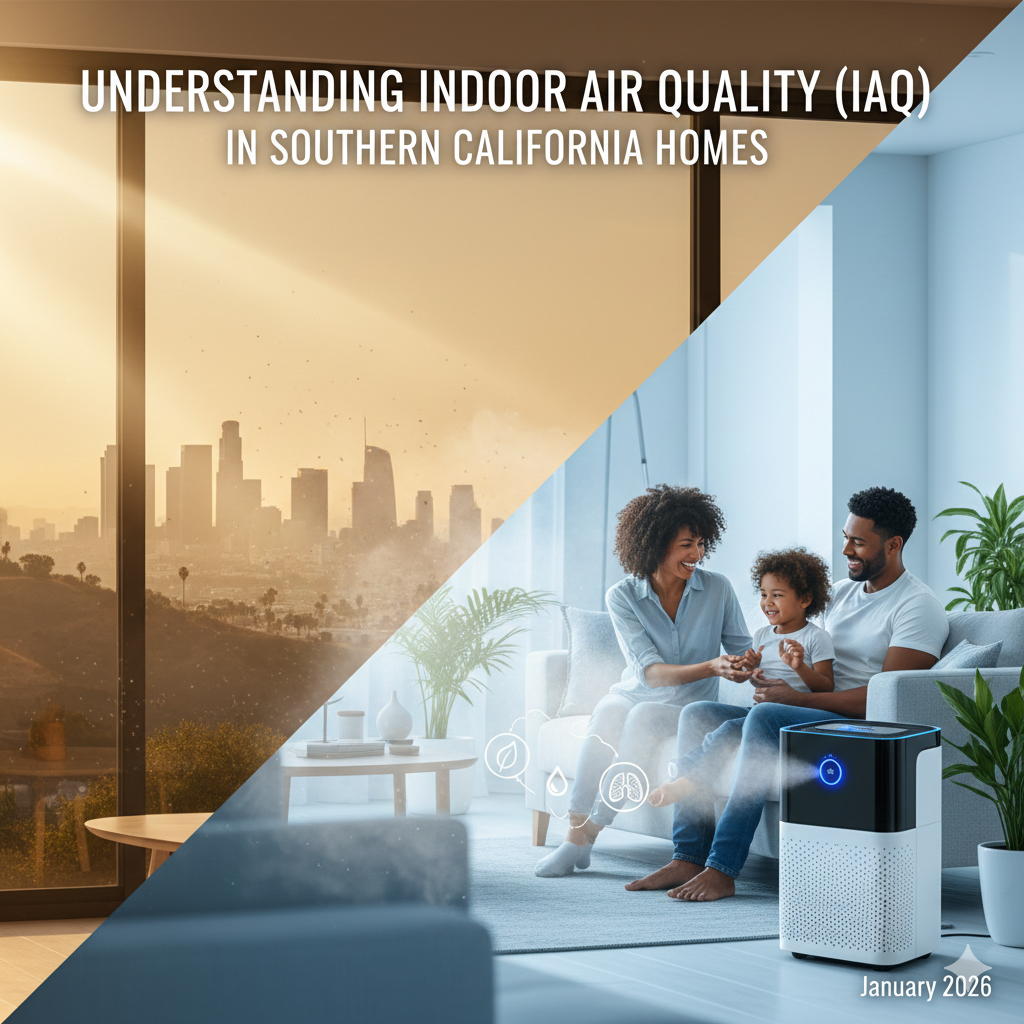
IAQ refers to the cleanliness and safety of the air within your home, focusing on:
Pollutant levels (Dust, chemicals, etc.)
Humidity balance (Target: 30-50%)
Ventilation & Circulation effectiveness
Poor air quality can trigger health issues such as persistent allergies, respiratory difficulties, and fatigue. For your HVAC system, poor IAQ leads to:
Increased energy consumption.
Premature component wear and higher maintenance costs.
Our local climate and environment create specific threats:
Natural Factors: Wildfire smoke, desert dust, and seasonal Santa Ana winds.
Coastal Issues: Marine layer moisture leading to mold risks.
Urban Factors: Year-round pollen and urban pollution.
| Source | Common Pollutants |
| Particulates | Construction debris, desert dust, pet dander, and carpet fibers. |
| Moisture & Mold | Bathroom steam, kitchen activities, leaky pipes, and poor ventilation. |
| Cooking | Gas stove emissions ($NO_2$), grease particles, and smoke. |
| VOCs (Chemicals) | Cleaning products, air fresheners, paint fumes, and new furniture. |
To combat these invaders, consider these advanced air treatment systems:
HEPA Filtration: Captures 99.97% of particles as small as 0.3 microns.
UV Air Purifiers: Eliminates airborne bacteria, viruses, and mold spores.
Smart Humidification: Maintains the 30-50% humidity "sweet spot" to prevent both mold and dry skin/respiratory irritation.
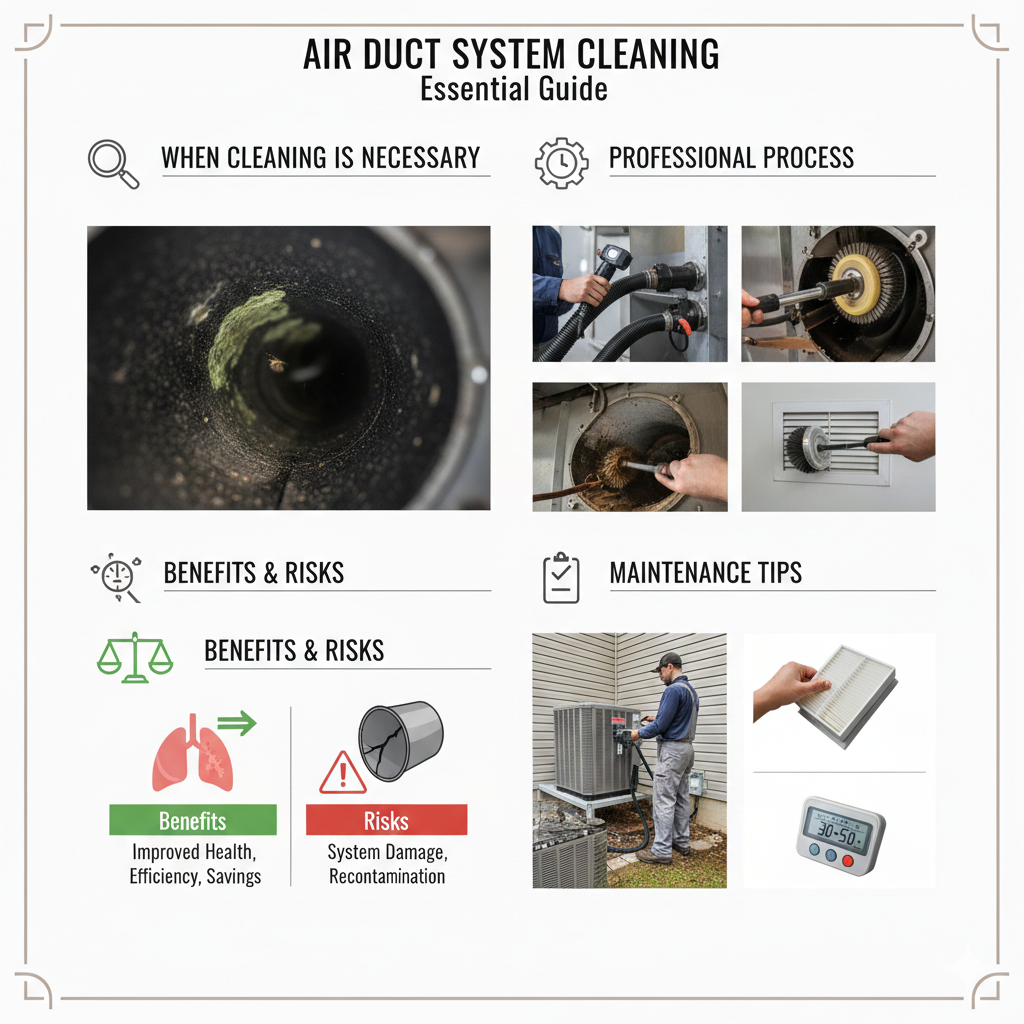
Your ductwork is the "respiratory system" of your home. Professional maintenance includes:
Visual Inspection: Checking for leaks, mold, or pest infestations.
Professional Cleaning: Removing allergens, pet hair, and debris.
Result: Clean ducts improve efficiency, extend equipment lifespan, and ensure consistent temperature control.
Don’t wait for health issues to arise. A professional IAQ assessment can identify hidden problems like mold behind walls or duct leaks, protecting both your family’s well-being and your HVAC investment.